

Property Assessment and Taxation Toolkit
To better help property owners understand the relationship between property assessment and taxes, as well as the key roles different levels of government play, MPAC has developed a toolkit for municipalities and government partners to use. These resources include information and tools designed to help you educate property owners and answer any questions they might have.
In this kit you will find:
- Shareable content to post on your website, newsletters and social media channels.
- Printable handouts.
- Key messages about the relationship between property assessment and property taxes.
- Frequently asked questions to share with your customer service and frontline staff. This useful information is designed to support them in responding to inquiries they may receive from property owners.
- MPAC’s video on how property taxes are calculated.
Digital content
Does a higher assessment mean higher property taxes?
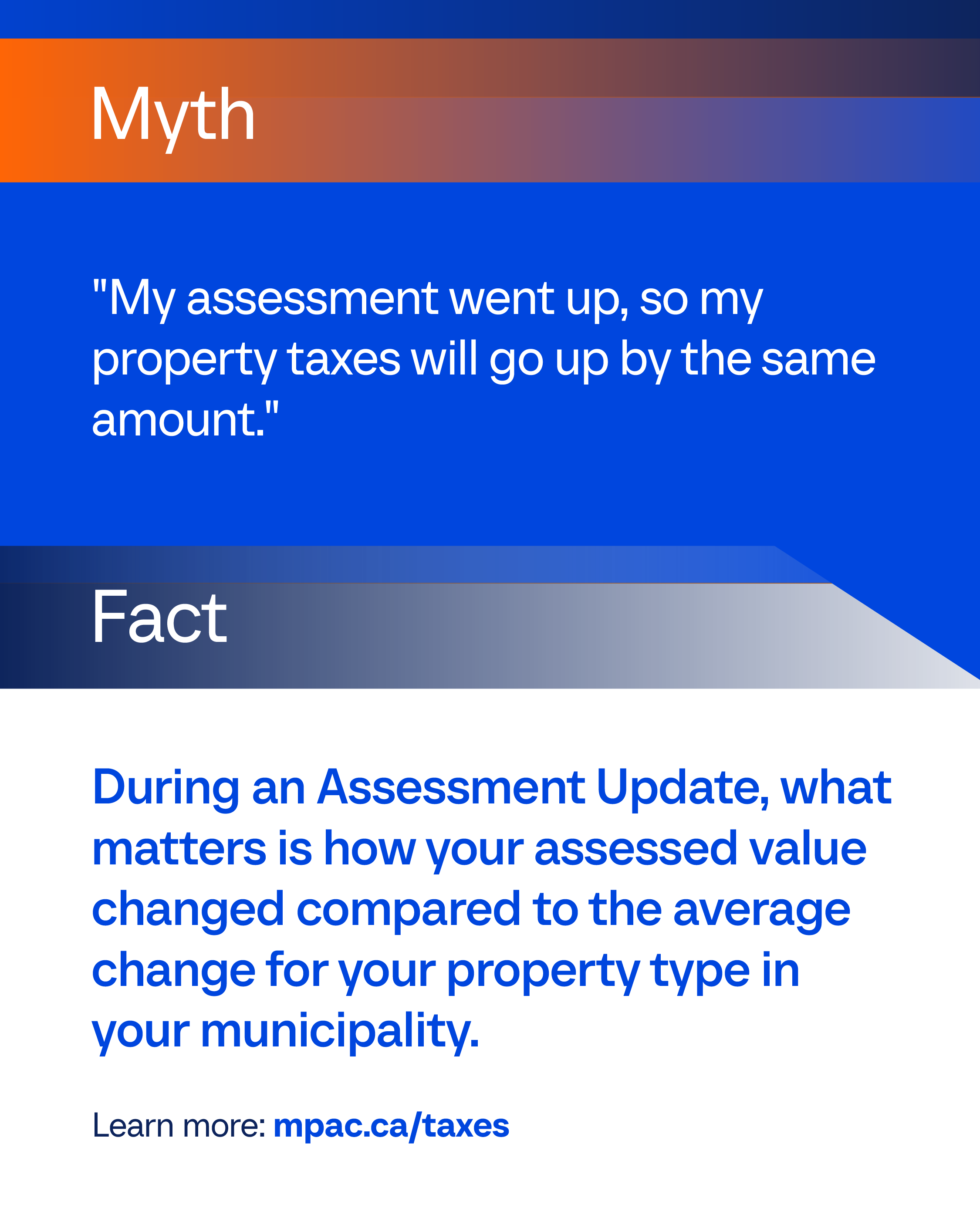
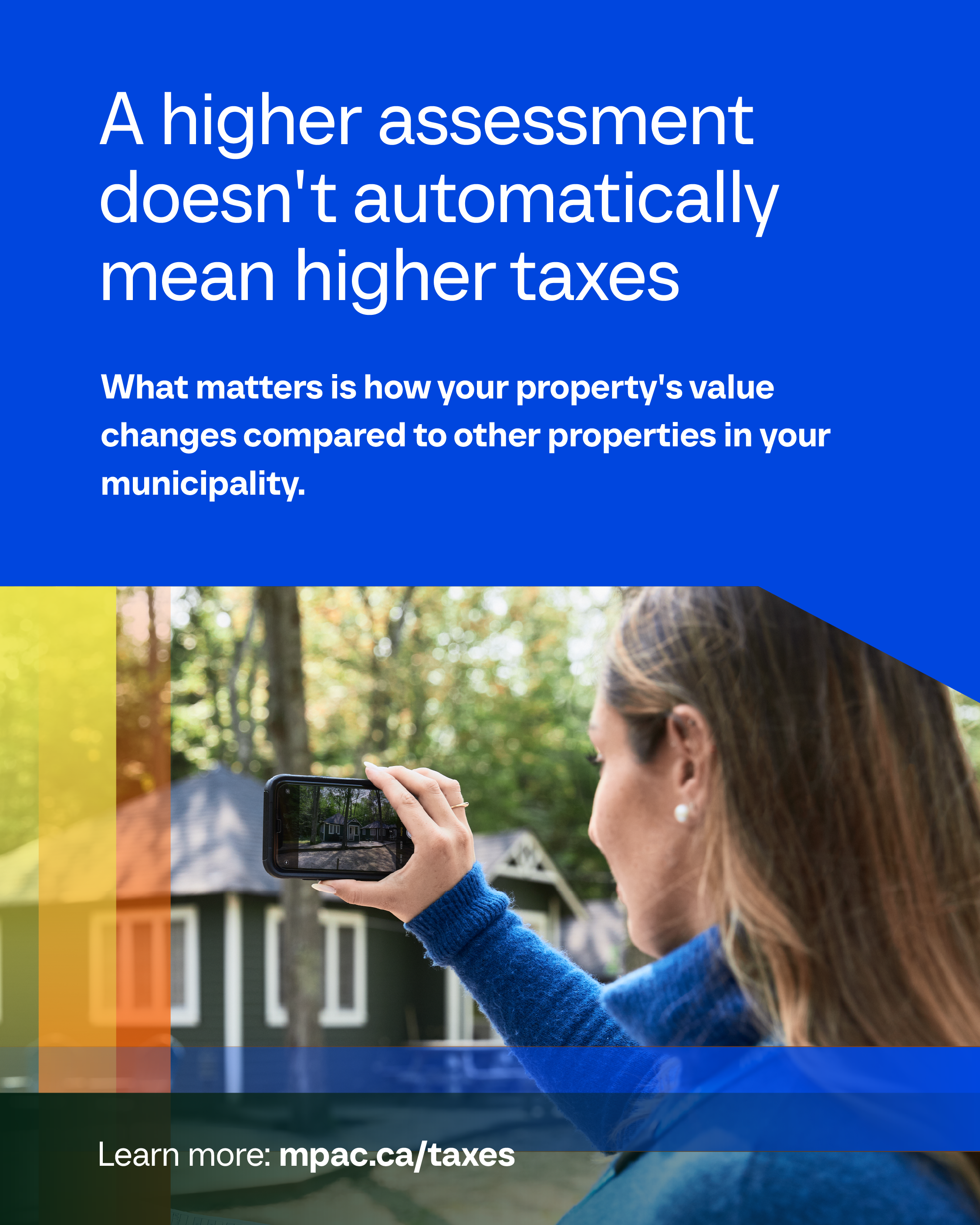
A higher property assessment doesn't automatically mean your property taxes will increase by the same amount.
Property taxes are based on both your property's assessed value, determined by MPAC (Municipal Property Assessment Corporation), and your municipality's tax rate.
During a province-wide Assessment Update, what matters most is how your property's value changes compared to the average change for your property type in your municipality.
For more information, visit mpac.ca/taxes.
Does a higher assessment mean higher property taxes?
A higher assessed value does not automatically mean your property taxes will increase by the same amount. Property taxes are based on two key factors: your property's assessed value and the tax rates applied to it. MPAC (Municipal Property Assessment Corporation) determines assessed values. Municipalities determine the funding needed for local programs and services and set tax rates to collect those funds. Education tax rates are set by the Province of Ontario.
During an Assessment Update
An Assessment Update moves every property in Ontario to a new valuation date, so all values reflect the same point in the market.
What matters most is how your property's value changed compared to the average change for your property type in your municipality. If your value changed at close to that average, the Assessment Update itself does little to your share of municipal taxes. If it increased more than the average, your share could rise. If it increased less, your share could fall.
Between Assessment Updates
A property's assessed value can also change on its own. For example, after new construction, an addition or renovation, a change in how the property is used or classified, or a severance or consolidation. In these cases, the change reflects what happened to that specific property, so it can affect that property's taxes more directly.
Your final tax bill also depends on your municipality's budget decisions, which are made separately from the assessment process.
This is why a change in assessed value does not automatically result in the same change to your property tax bill.
Learn more at mpac.ca/taxes.
Understanding property assessments
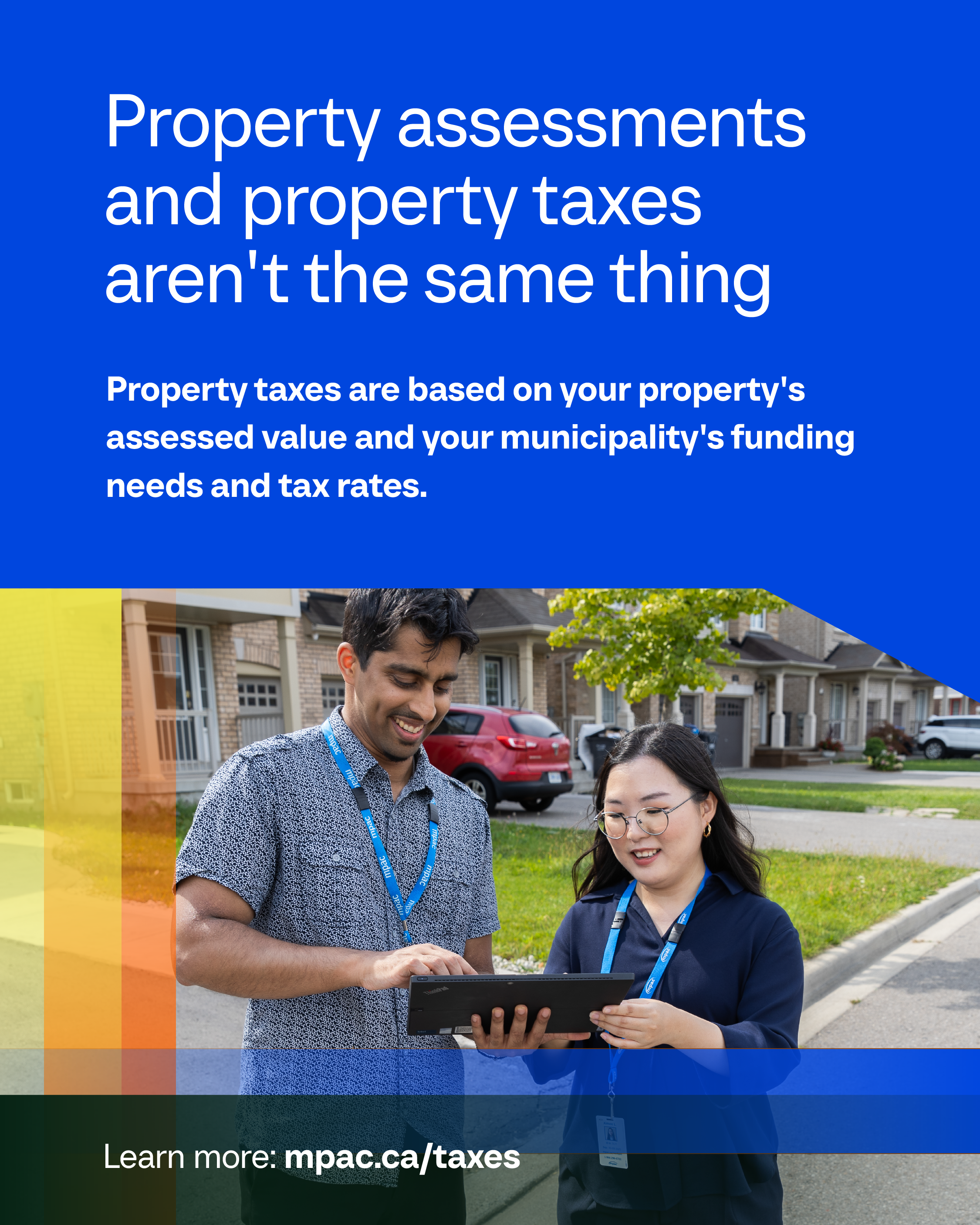
Property assessments and property taxes are connected, but they don't mean the same thing.
MPAC (Municipal Property Assessment Corporation) determines the assessed value and classification of properties across Ontario. Municipalities use this information to help determine each property's share of municipal taxes and to support their property tax system.
A property's assessed value is only one factor used to calculate property taxes. Tax rates set by your municipality and the Province of Ontario also play an important role.
During an Assessment Update
An Assessment Update moves every property in Ontario to a new valuation date, so all values reflect the same point in the market.
What matters most is how your property's value changed compared to the average change for your property type in your municipality. If your value changed at close to that average, the Assessment Update itself does little to your share of municipal taxes. If it increased more than the average, your share could rise. If it increased less, your share could fall.
Between Assessment Updates
A property's assessed value can also change on its own. For example, after new construction, an addition or renovation, a change in how the property is used or classified, or a severance or consolidation. In these cases, the change reflects what happened to that specific property, so it can affect that property's taxes more directly.
Your tax bill
Your final tax bill also depends on your municipality's budget decisions, which are made separately from the assessment process. That's why a change in your assessed value does not automatically result in the same change to your property tax bill.
For more information, visit mpac.ca/taxes.
Social media content
Option 1
A higher property assessment doesn’t automatically mean higher property taxes.
Property taxes are based on two things: your property's assessed value, determined by MPAC (@Municipal Property Assessment Corporation), and the tax rates set by your municipality and the Province of Ontario.
During a province-wide Assessment Update, what matters most is how your property's value changes compared to the average change for your property type in your municipality. If your value increased less than that average, your taxes could go down. If it increased more, they could go up.
Learn more at mpac.ca/taxes.
Option 2
Property assessments and property taxes are connected, but they're not the same thing.
MPAC (@Municipal Property Assessment Corporation) determines a property's assessed value. Municipalities set tax rates based on local funding needs, then use assessed values to determine each property's share of municipal taxes. Education tax rates are set by the Province of Ontario.
That's why a change in your assessed value does not automatically result in the same change to your property tax bill.
For more information, visit mpac.ca/taxes.
Option 1
A higher property assessment doesn’t automatically mean higher property taxes.
Property taxes are based on two things: your property's assessed value, determined by @MPAC_Ontario (Municipal Property Assessment Corporation), and the tax rates set by your municipality and the Province of Ontario.
During a province-wide Assessment Update, what matters most is how your property's value changes compared to the average change for your property type in your municipality. If your value increased less than that average, your taxes could go down. If it increased more, they could go up.
Learn more at mpac.ca/taxes.
Option 2
Property assessments and property taxes are connected, but they're not the same thing.
@MPAC_Ontario (Municipal Property Assessment Corporation) determines a property's assessed value. Municipalities set tax rates based on local funding needs, then use assessed values to determine each property's share of municipal taxes. Education tax rates are set by the Province of Ontario.
That's why a change in your assessed value does not automatically result in the same change to your property tax bill.
For more information, visit mpac.ca/taxes.
Option 1
A higher property assessment doesn't automatically mean higher property taxes. Property taxes are based on both your property's @MPAC_Ontario assessed value and the tax rates set by your municipality and the Province of Ontario. Learn more: mpac.ca/taxes.
Option 2
Property assessments and property taxes are connected, but they're not the same thing. A change in your @MPAC_Ontario assessed value does not automatically result in the same change to your municipal property tax bill. Learn more: mpac.ca/taxes.
Graphics
Include a graphic with your content. Right-click to save and download.

Print materials
To enhance your communication with property owners, we've created ready-to-use print materials.
Download the PDFs below to include in your mailings or handouts.
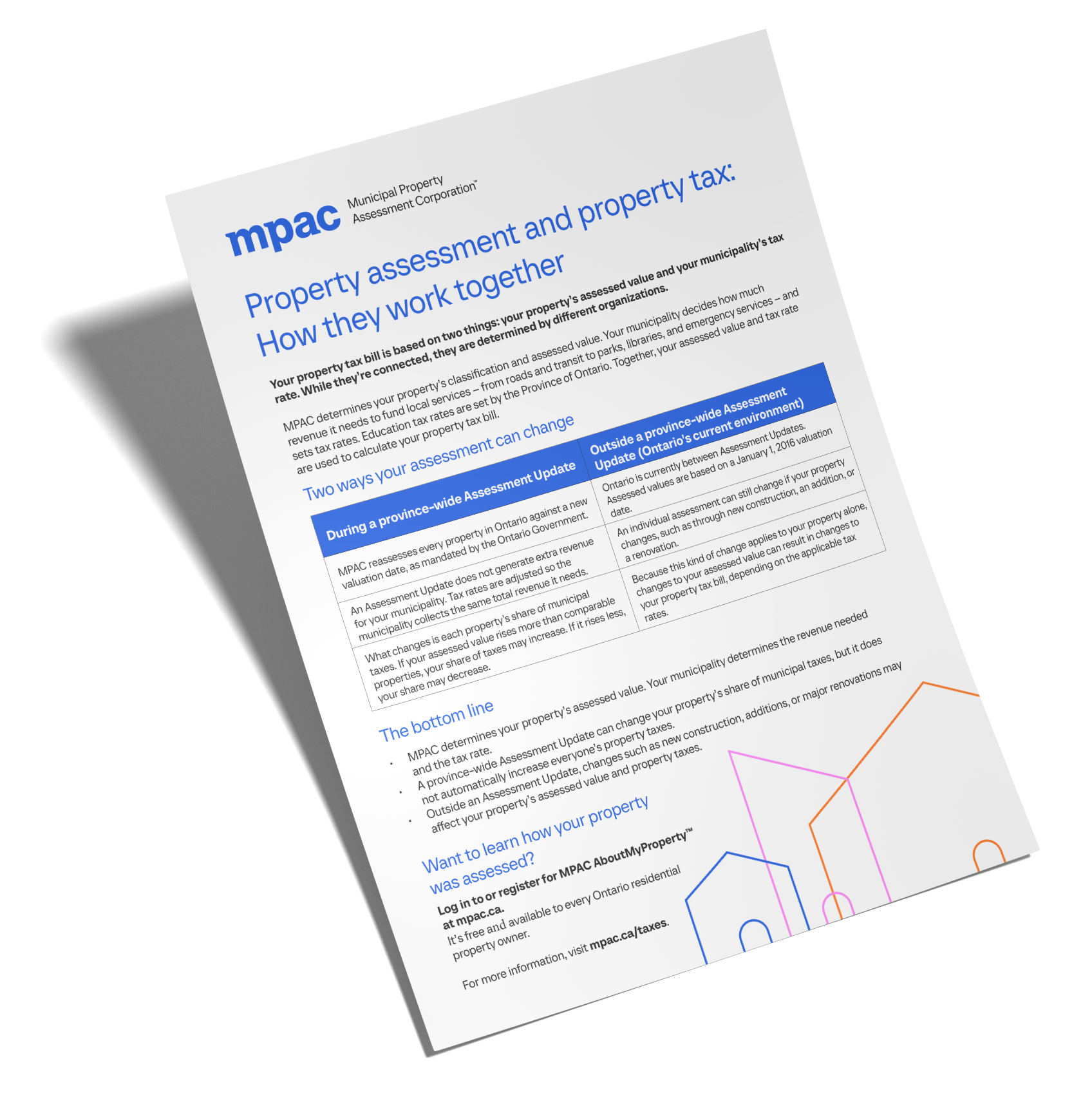
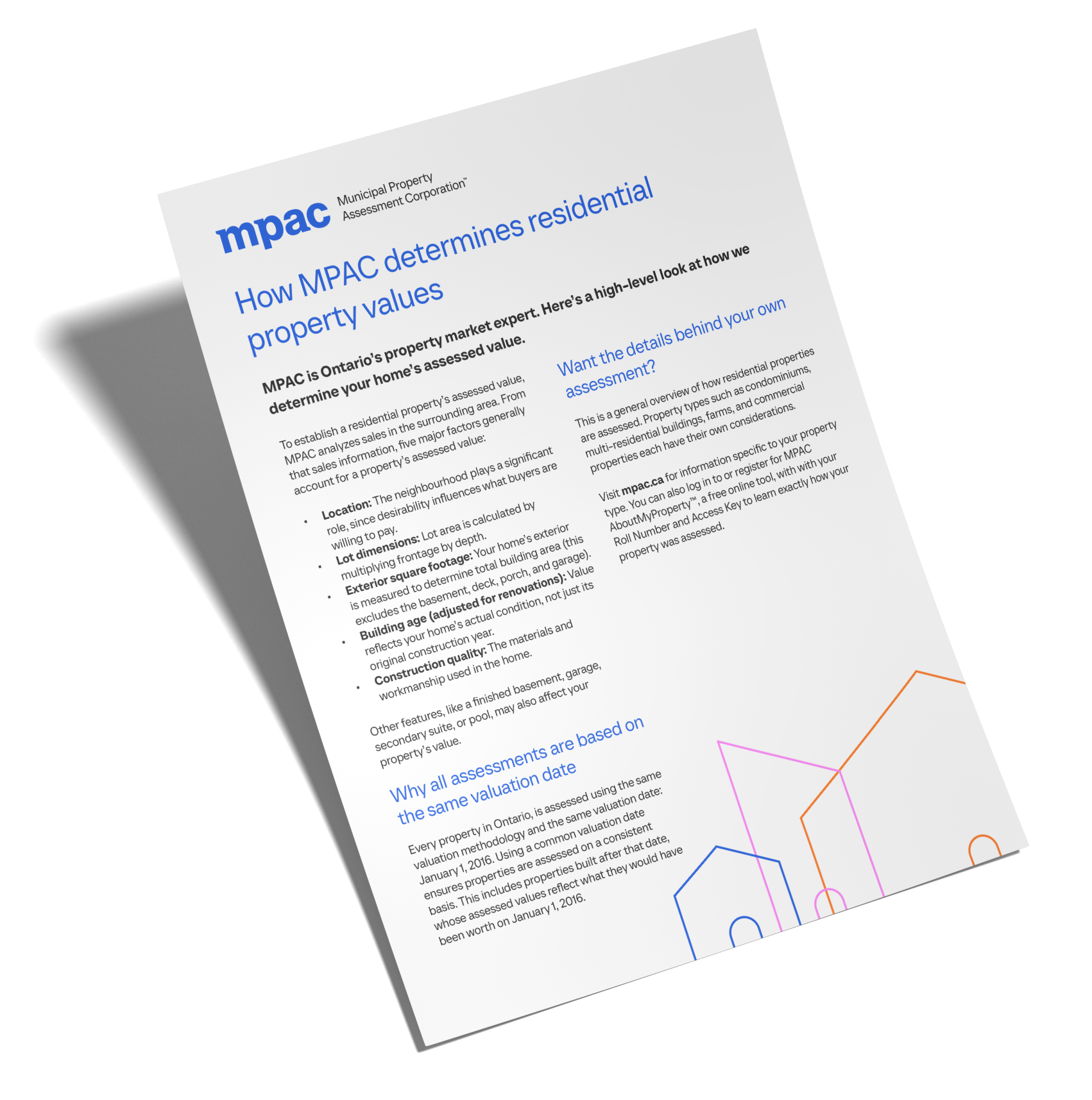
One-pager A: Property assessment and property tax: How they work together
One-pager B: How MPAC determines residential property values 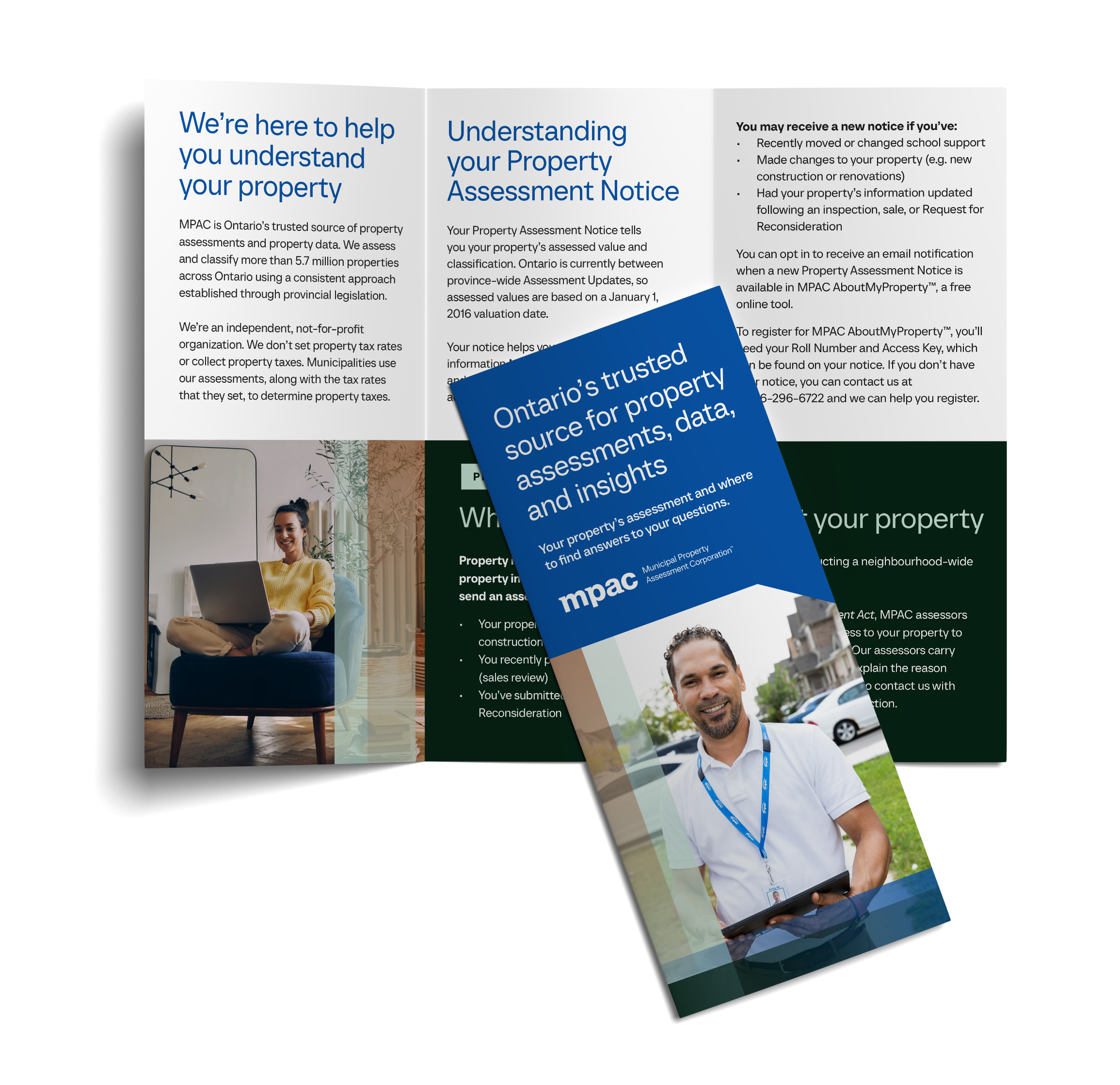
Tri-fold brochure: Ontario's trusted source for property assessments, data, and insights
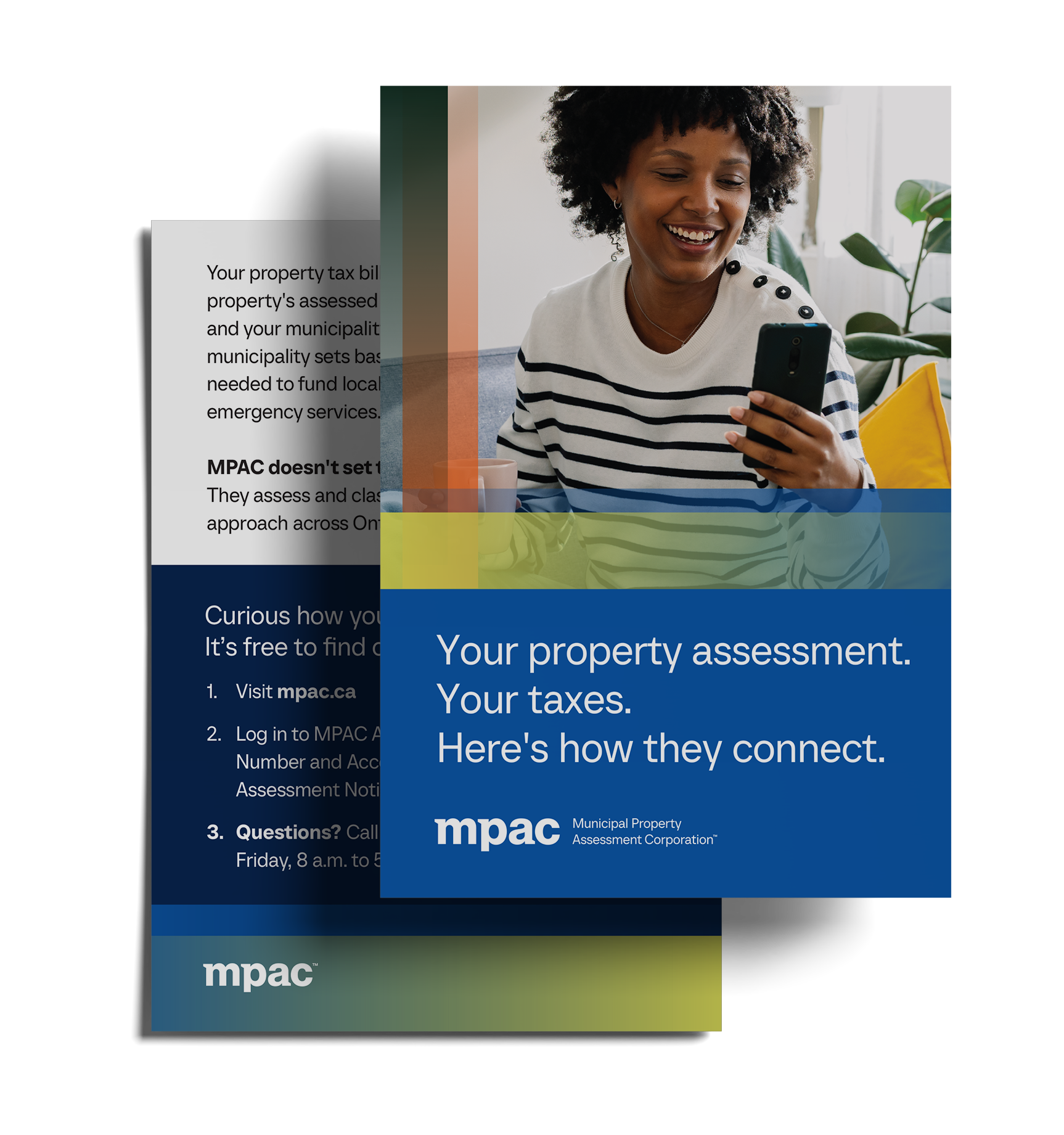
Postcard: Property assessment and taxes
Buckslip: Property assessment and taxes
Key messages
Read, share, or download this document of key messages to help inform your content. Topics include:
- Ontario's property assessment and taxation system
- How property assessments and property taxes work together
- How property assessments are determined
- Supporting property owners with assessment questions
Frequently asked questions (FAQs)
Share this helpful document with your staff to assist them with responding to commonly asked inquiries and questions regarding the property assessment and taxation process.
Video: How Property Taxes are calculated
To help provide clarity for property owners on how property taxes are calculated, including the link between property assessment, municipal service costs and required tax dollars, watch MPAC’s helpful and informative video.
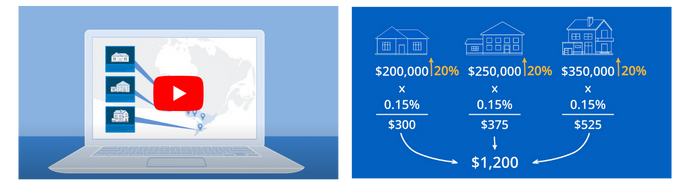
Note: A new version of this video is coming soon!
Additional resources
Looking for more information? Visit mpac.ca/taxes.
Have additional questions? Municipalities can contact your local Municipal and Stakeholder Relations team and MPPs and constituency office staff can contact your Government Relations team.